Want to be in the loop?
subscribe to
our notification
Business News
FRESH POLICIES TAKE EFFECT IN MARCH
Cash payment bans
Under Decree No. 222/2013/ND-CP, dated December 31, 2013, on cash payment, organizations using funding from the State budget shall not be allowed to make payments in cash except for some cases as prescribed by the Ministry of Finance.
Meanwhile, organizations using State capital shall have to perform non-cash transactions except for some cases as regulated by the State Bank of Viet Nam.
Non-cash payments are also applicable to securities transactions on the Stock Exchange by organizations and individuals.
They do not make payments in cash for securities transactions registered and deposited at the Center of Securities Depository and not conducted through the transaction system of the Stock Exchange.
Enterprises shall not be allowed to conduct cash transactions in capital contribution; in purchase, sale and transfer of the capital parts contributed into enterprises. Enterprises which are not credit organizations shall not be allowed to use cash to borrow and lend to each other.
The Decree became effective on March 1, 2014
Exemption of duty on raw material gold
The Prime Minister on January 22, 2014 issued Decision 08/2014/QD-TTg on exemption of export and import duty on raw material gold.
Accordingly, the State Bank of Viet Nam raw material gold imported and exported by the State Bank of Viet Nam shall be exempted from export and import duty since March 15, 2014.
Incentives for poor households
The Ministry of Planning and Investment and the Ministry of Finance on February 12, 2014 issued a joint circular guiding capital allocation to realize the Program on supporting fast and sustainable poverty reduction for the poorest districts nationwide.
Under the joint circular, the State will share 50% of interest rates on the money that poor households borrow from commercial banks for afforestation.
A poor household would be able to borrow a maximum of VND 5 million (US$ 230) with zero percent interest rate in two years for purchase of farm or aquatic breeds.
In addition, poor households in border and far-reaching areas would receive 15 kilograms of rice per person per month when they are unable to feed themselves.
According to the joint circular which comes into force on March 28, 2014, each poor district would get VND 100 million (around US$ 4,700) to conduct trade promotion activities to introduce their products.
More preferential assistance for the handicapped
Joint Circular 42/2013/ TTLT-BGDDT-BLDTBXH-BTC on educational policy for the handicapped was co-issued by the Ministry of Education and Training, Ministry of Labor, Invalids and Social Affairs, and the Ministry of Finance.
Accordingly, people with disabilities who come from low-income families studying at educational establishments will receive a scholarship equivalent to 80% of the basic wage level in accordance with the Government’s regulations.
The disabled persons are financially supported by the State to purchase learning tools while studying at educational establishments.
They will also receive tuition fee exemption and assistance.
The disabled students may be exempted from some contents, subjects or activities and the evaluation of their studying results is conducted on the basis of encouraging their efforts.
Source: VGP
Related News

BANKING / FINANCE / INSURANCE / TAX
REMITTANCES TO HCM CITY RISE NEARLY 40% IN Q3
Remittances to HCM City reached more than US$2.83 billion in the third quarter of this year, up 39.5 per cent from the previous quarter and 3.6 per cent year-on-year. This was the first quarter showing positive annual growth this year, helping narrow the decline in remittance inflows over the first nine months. According to the State Bank of Vietnam (SBV)’s Regional Branch 2, remittances transferred to HCM City through credit institutions and economic organisations totalled $2.835 billion in Q3, an increase of more than $802 million from the previous quarter.

TECHNOLOGY
TECH SECTOR GROWTH OPENS UP OPPORTUNITIES FOR VIỆT NAM TO GO GLOBAL
The growth of the electronics, semiconductor and high-tech sectors worldwide is opening up a variety of opportunities for Vietnamese enterprises to integrate more deeply into the global supply chain. However, to become suppliers for these corporations, domestic enterprises must meet rigorous standards regarding quality, technology, productivity and order fulfilment capabilities.
VIETNAM ECONOMY INVESTMENT
FOREIGN INVESTORS SEEKING A SYNCHRONISED MANUFACTURING ECOSYSTEM
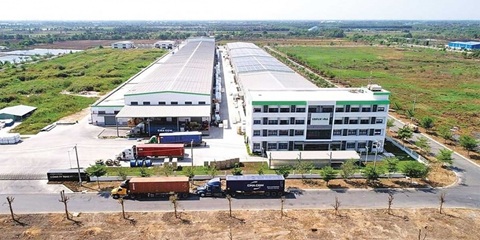
Instead of focusing only on land costs and incentives as usual, foreign investors are seeking a synchronised manufacturing ecosystem, from stable power supply and logistics to shared infrastructure and the convenience of completing residence procedures for experts to serve their long-term investment in the country.
MEMBER CORNER / PROMOTIONS
SENTRYSAFE FHW40200 – PROTECT YOUR VALUABLES, ENJOY PEACE OF MIND!
Looking for a reliable solution to protect your important documents, cash, and valuables from fire and water damage? Genuine SENTRYSAFE - Reliable protection for your valuables and peace of mind! Contact Sen Wai Vietnam for more information and personalized product recommendations.
PROPERTY / INDUSTRIAL ZONE
HCM CITY ATTRACTS US$5.7 BILLION INTO EXPORT PROCESSING AND INDUSTRIAL ZONES
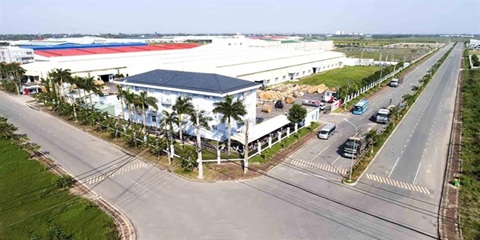
HCM City attracted US$5.7 billion in domestic and foreign investment into its export processing and industrial zones during the first nine months of 2026. The figure exceeded the city's full-year target by 31 per cent, highlighting strong momentum in high-quality industrial investment under Resolution No.10-NQ/TW. Total investment reached 131 per cent of the 2026 target of $4.25 billion and represented a 29 per cent increase compared with the same period in 2025, according to the city's Export Processing and Industrial Zones Authority (HEPZA).
INFRASTRUCTURE / CONSTRUCTION / LOGISTIC / PORT
DONG THAP PROVINCE STEPS UP INDUSTRIAL EXPANSION AND INFRASTRUCTURE CONNECTIVITY
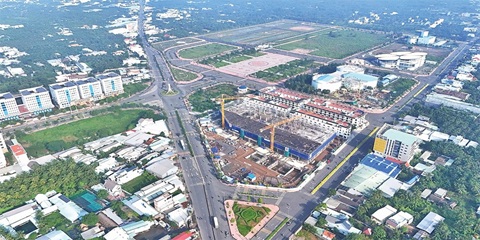
Accelerating public investment, strengthening inter-regional connectivity, and expanding industrial land are helping Dong Thap efficiently bolster competitiveness and drive economic growth. Following the 2025 merger of the former Dong Thap and Tien Giang provinces, the expanded Dong Thap province in the Mekong Delta faces mounting pressure to accelerate infrastructure development and strengthen connectivity among local economic zones, urban areas, industrial parks (IPs), and production centres.
Events Sponsors






















